
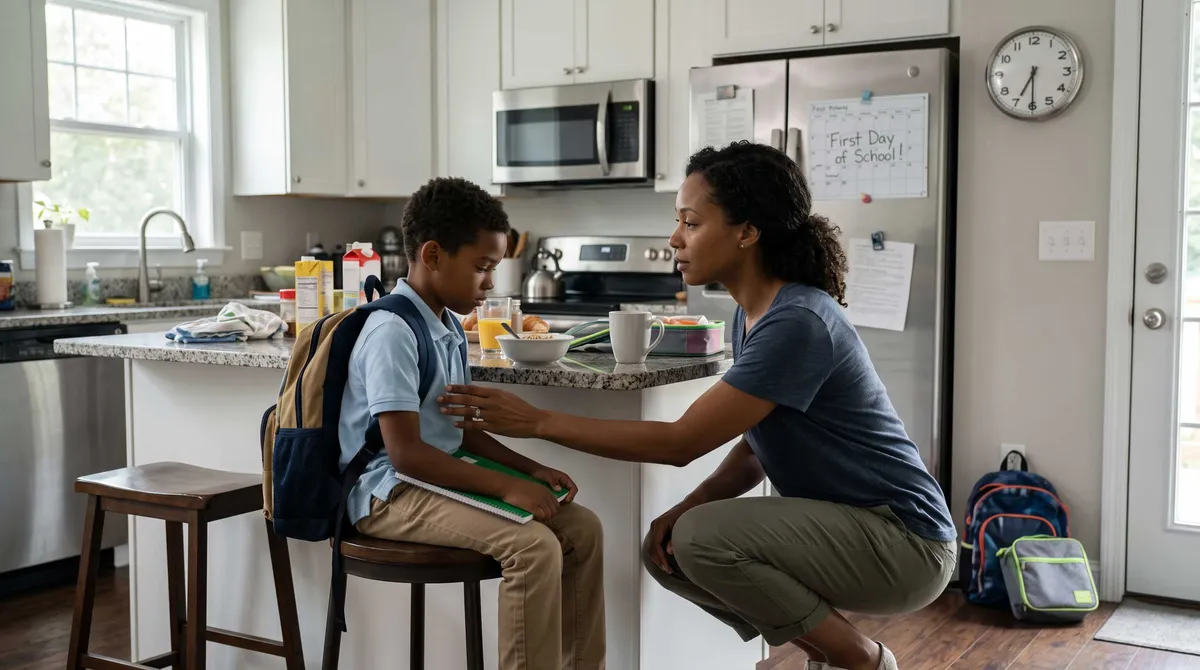
The return to school changes more than a child’s daily schedule. Bedtimes shift earlier, mornings become less flexible, work and childcare logistics increase, and new academic and social concerns enter the picture. Even families who are looking forward to the school year may need time to adjust.
Needing time to adjust does not necessarily mean that something is wrong. Knowing what to expect, and when to take symptoms seriously, can help parents respond more effectively.
Why the Transition Takes Time
A changing routine can disrupt sleep, and insufficient sleep affects mood, concentration, behavior, and learning. The American Academy of Pediatrics recommends moving bedtime and wake time toward school-year hours a week or two before the first day.
The American Psychological Association notes that back-to-school time can test families’ coping skills as they manage new teachers, new classrooms, and hectic school and work schedules. It also notes that children are capable of coping with this kind of change when parents create space for them to share and express their feelings about returning to school.
What It Looks Like for Kids
Uncertainty is one common source of back-to-school anxiety. New teachers, new classrooms, and shifting social dynamics can all feel unsettling, even for children returning to a familiar school. Children may also be concerned about academic demands, friendships, or situations from the previous year that were unresolved.
The instinct when a child is anxious is to reassure: it’ll be fine, you’ll love it. Reassurance has its place, but moving to it too quickly can make a child feel that the worry is being dismissed. Asking what specifically feels hard and listening before moving to solutions may be more useful. The APA recommends asking children about their fears or worries, talking through uncertainty together, and empathizing with what they are going through.
Younger children may not have the vocabulary to explain what they are experiencing. Stress or anxiety can appear as clinginess, sleep disruption, stomachaches, or changes in behavior. These symptoms do not necessarily indicate a mental-health condition, but persistent or concerning physical symptoms should be discussed with the child’s pediatrician. The American Academy of Pediatrics notes that many children who avoid school experience physical complaints such as headaches and stomachaches that are most common on school days and typically absent on weekends.
What It Looks Like for Parents
For parents, the school-year return changes household logistics in concrete ways: earlier wake times, packed morning schedules, school pickups and drop-offs, work deadlines that now have to coexist with school events, and the mental load of keeping track of everyone’s schedules at once. That shift is demanding regardless of how familiar it is.
Parents are also frequently managing their own adjustment while trying to steady their children’s. When a child is anxious or struggling, the emotional labor on top of the logistical load can compound quickly. It is worth acknowledging that difficulty rather than treating it as incidental.
Parents may also need to adjust their own sleep, work, and household routines. Allowing extra time for mornings, planning school logistics in advance, and protecting a consistent sleep schedule can reduce some of the strain during the transition.
Ways Parents Can Support the Transition
Guidance from the AAP, CDC, and APA suggests several ways parents can support the transition:
Restore sleep routines before school starts. The AAP recommends moving bedtime and wake time toward school-year hours a week or two before the first day.
Walk through what to expect. Explaining what the first day may look like, visiting the school in advance if possible, and answering questions honestly can make the situation feel more familiar.
Ask specific questions. Rather than asking “How was school?”, try asking about lunch, recess, a particular class, or another specific part of the day. A narrower question may give a child an easier place to begin.
Acknowledge feelings without rushing to fix them. When children express worry, naming the feeling and sitting with it before offering solutions may be more helpful than immediate reassurance.
Build connection into the routine. The CDC identifies feeling cared for, supported, and connected at school as protective for student mental health. Make space for regular conversations about school, including what feels comfortable and what does not, so children have somewhere to bring what they are carrying.
When to Seek Support
Mild anxiety and irritability at the start of the school year are common. Symptoms that begin to ease as the routine becomes familiar may reflect a temporary adjustment. Symptoms that intensify, do not begin to ease as the routine becomes familiar, or interfere with sleep, eating, school attendance, or daily functioning deserve closer attention.
School refusal deserves earlier attention than other adjustment symptoms. The American Academy of Pediatrics recommends seeking professional assistance if school avoidance lasts more than one week. If a child is regularly refusing school, contact the child’s pediatrician, school counselor, or a mental-health professional rather than waiting.
For adults, if low mood, disrupted sleep, or persistent anxiety is not easing as the routine settles in, that is worth discussing with a professional. The school-year transition can amplify stress that was already present. Discussing persistent symptoms with a professional may help clarify what kind of support is appropriate.
Compassion Mental Health Counseling is based in Smithtown and works with children, adolescents, and adults experiencing anxiety, stress, and life transitions. A free 15-minute consultation is available at compassionmentalhealthcounseling.com, by calling 631-681-6872, or by emailing CompassionMHC@gmail.com.